Campaigning in Berlin to Give Israelis Abroad the Right to Vote
Berliner Zeitung — 1 March 2021
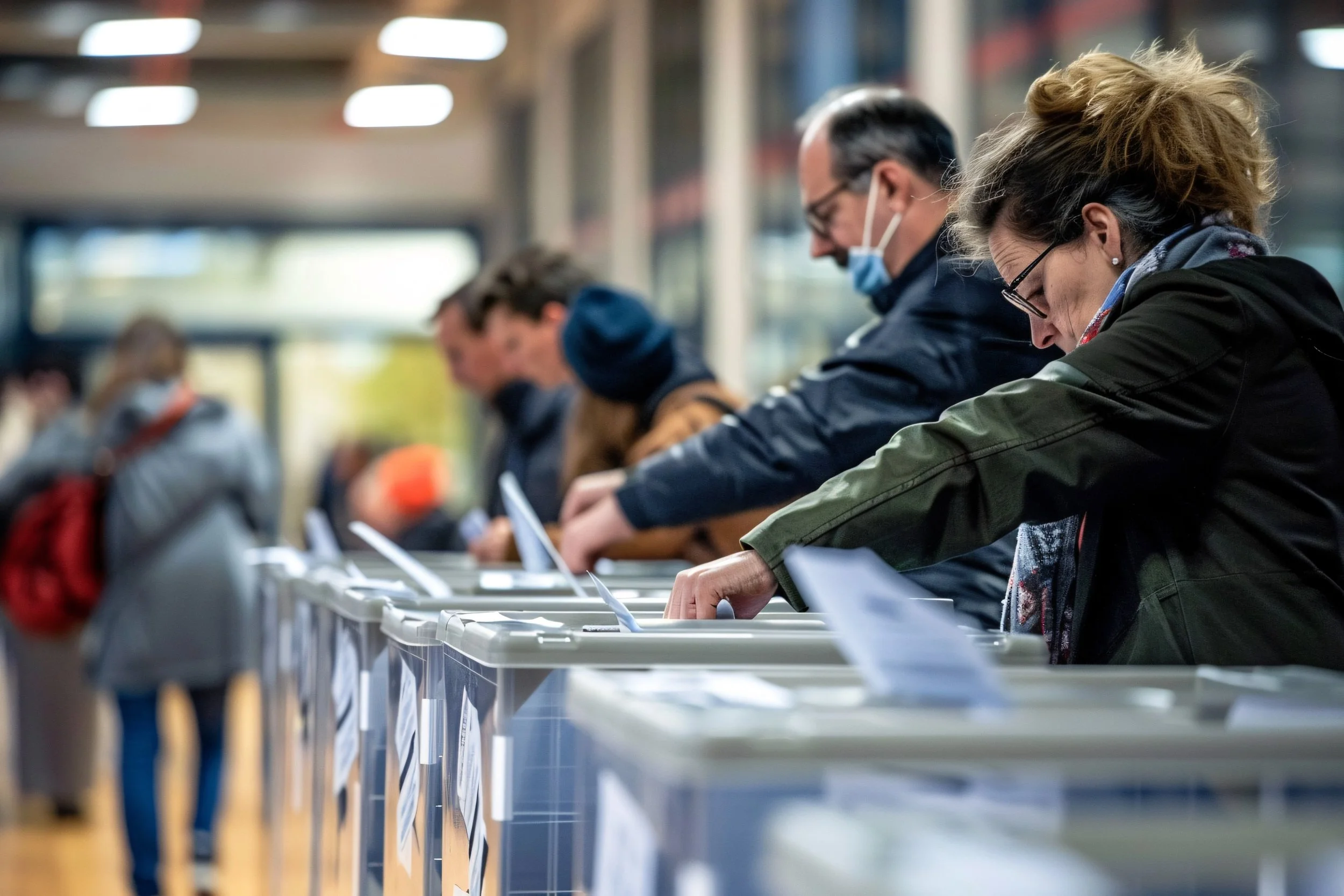
Campaigning in Berlin to give Israelis abroad the right to vote
An Israeli activist living in Berlin explains how she is working to get half a million expats the right to participate in elections at home.
Mati Shemoelof
Campaigning in Berlin to Give Israelis Abroad the Right to Vote
Mati Shemoelof · Berliner Zeitung · 1 March 2021
An Israeli activist living in Berlin explains how she is working to give Israelis living abroad the right to participate in elections at home.
Campaigning in Berlin to Give Israelis Abroad the Right to Vote
With the Israeli parliamentary elections scheduled for 23 March 2021, Israeli activists in Berlin launched Defend Israeli Democracy, a petition calling for voting rights for Israelis living abroad.
The initiative was founded by Marianne Matyash, the daughter of former Israeli ambassador Efi Ben Matityahu. She moved to Berlin with her partner and first child in 2016. At the time of this interview, Matyash was pregnant with her second child, one of the reasons she would not be able to fly to Israel to vote.
Because of Israeli naturalisation and residency laws, citizens who do not live in Israel are generally not allowed to vote from abroad. The number of Israelis living outside the country is estimated at more than 500,000.
Matyash intended to speak with future members of the Knesset and build a coalition with Israeli communities around the world, including large communities in New York, London and Melbourne. The initiative had already established a network of Israelis abroad in solidarity with the weekly “Coming to Balfour” protest movement outside the Israeli prime minister’s residence in Jerusalem.
Mati Shemoelof spoke with Matyash about the initiative and its growing presence on social media.
Will you fly to Israel to vote in the coming elections?
Marianne Matyash: I couldn't if I wanted to because I will be at the end of my third trimester of my pregnancy. Otherwise, I definitely would try. Furthermore, in these elections, it is slightly unclear if it is possible to go because at the moment you need at least two weeks of isolation once you land. You can’t vote during quarantine. And currently there are no flights to Israel. Which is part of the reason that we are starting this initiative.
You founded the Defending Israel Democracy movement in Berlin. Now, you're at the forefront of a worldwide movement to get voting rights for Israeli expats. Why is this coming from an Israeli in Berlin?
Marianne Matyash: This is just a very close subject to my heart. I’ve spent a lot of years as a representative of Israel abroad. My identity is a complex one because of my upbringing as the daughter of an ambassador. It is something from my life, from my blood – it is who I am.
Why does Israel not give the right to vote to those living abroad?
Marianne Matyash: First, it has to do with the traditional narrative of Israel where you have to do Aliya [a Zionist term for immigration to Israel] in which you have to be part of the country; you have to be very physically present. That is the way Israeli people view people who leave Israel.
But I think this is really outdated considering that we live in a very global economy and a lot of Israelis leave for several years and then come back. It is a vital part of our economy. But we haven’t updated it in our emotional culture.
Another reason is that we have a very unusual law in Israel regarding citizenship: if you are a Jew living abroad you are basically eligible to receive citizenship immediately once you reach Israel [as part of the Jewish right of return].
This creates a precarious situation because you have more Jews living abroad than those living in Israel. So theoretically, with this new law, anyone who wants to vote abroad could come to Israel, receive citizenship and then just leave and vote. And you would have more people who never resided in Israel, who are not actually Israeli, who would determine the lives of those who are living in Israel. And that is something that we all want to avoid.
So it is a little bit complex in terms of the law. And now is the time to deal with it head on. And settle the legal loophole.
Was there never a right to vote from abroad?
Marianne Matyash: It started with nobody able to vote from abroad. In the 1990s, official representatives from Israel, like the Ministry of Foreign Affairs, KKL and these kinds of organisations, received consideration to be able to vote from abroad through the embassies.
Now, people who are on official duty are eligible to vote by mail.
You decided to concentrate on giving the right to vote only to Israeli citizens with Israeli residency but not to Israelis who lost their citizenship, although Israel sees itself as responsible for all Jewish lives abroad in the past, present and future.
Marianne Matyash: We don't want to give all Israelis the right to vote. Rather, we want to make it even stricter.
As a first step, we ask that every Israeli who currently holds Israeli residency should be able to vote from abroad. If you have been abroad for less than five years and you are still paying the Israeli national insurance, you should be able to access the right to vote from abroad.
We think there are about 500,000 Israelis around the world with Israeli residency.
Are you a resident of Israel right now, while living in Berlin?
Marianne Matyash: No.
So, you are fighting for a right that wouldn't apply to you.
Marianne Matyash: First of all, I am trying to bring it into the public discussion. I think that the subject of what it means to be Israeli and the democratic right to vote is something that it is heartfelt for us all and it doesn’t matter if we are currently residents or not.
I grew up in Israel, I served in the army. I lived there most of my life. But right now, I don’t live there. And officially by these standards, I won’t be able to vote abroad. I can still vote in Israel.
But just because the way the law is set up right now, we want to be very careful. But I am starting this fight because I love Israel and I care about democracy in Israel.
I happen to be a person who grew up outside of Israel most of the time because my father was an ambassador. I want Israelis abroad to be recognised as part of the social structure of Israel. I think that it is a very important step.
I think that it brings up these philosophical subjects that we are avoiding about what it means to be Israeli. That will help resolve a lot of issues beyond just the right to vote.
Right now, we are fighting to get recognition for the right to vote for Israeli residents abroad, but I think that we need to go forward and fix the way right of return law. This law shouldn’t keep us captive in the mindset from the 1950s.
The right of return is only for Jews.
Marianne Matyash: Your first question was ‘why is it so difficult?’ That is why it is so difficult. Because we are entangled with all these issues we are not willing to confront.
Referring to Israelis living in Berlin, Yair Lapid, one of the main opposition figures, said in 2014: “These people are anti-Zionists. I’m a Zionist, I think Jews should live in Israel.” Are you optimistic about finding support among Israeli politicians?
Marianne Matyash: Yes, I am. Lapid’s comments were very populist but in reality, this subject has been brought up several times by politicians from different sides of the political spectrum.
In fact, Benjamin Netanyahu himself said in the past that he supports legislation on this matter.
Why do you think Netanyahu would allow it? Does he believe there are more right-wingers abroad?
Marianne Matyash: Most people think that. Actually, the last time it was brought up was by Nachman Shai and David Bittan, together in 2016. The whole process was blocked by the left-wing and religious parties.
This is not a leftist struggle at all. Netanyahu himself thinks that it will benefit him. He spent most of his youth and early adulthood abroad.
Why is it so urgent to ask for voting rights for Israeli expats right now?
Marianne Matyash: At this point in time, I think it is a very sensitive subject. Due to the corona measures, a lot of people who would fly to vote in Israel now can’t. Flights are cancelled. The Israeli airports were closed.
Maybe it's too late for these elections?
Marianne Matyash: We're not really aiming for these elections, for several reasons. We're bringing the subject up because it is an opportunity to discuss the subject. And it is an important moment because a lot of people are already talking about it.
And we are giving a voice to something that has already been discussed. We're looking forward to a fruitful cooperation with the future MPs in the Knesset. We want to find partners there that really could take this issue to legislation.
Originally published in Berliner Zeitung, 1 March 2021, as part of the Open Source initiative.
The article was submitted as part of Berliner Zeitung’s Open Source initiative, through which freelance writers and other contributors could submit articles for publication.
Related themes: Berlin · Israel · Israeli diaspora · Democracy · Voting rights · Migration · Expatriate communities · Israeli politics
Publication: Berliner Zeitung
Date: 1 March 2021
Author: Mati Shemoelof
Section: Activism
Keywords:
Mati Shemoelof, Israeli voting rights, Israelis abroad, Israeli elections, Berlin, Marianne Matyash, Defend Israeli Democracy, Israeli diaspora, citizenship, democracy