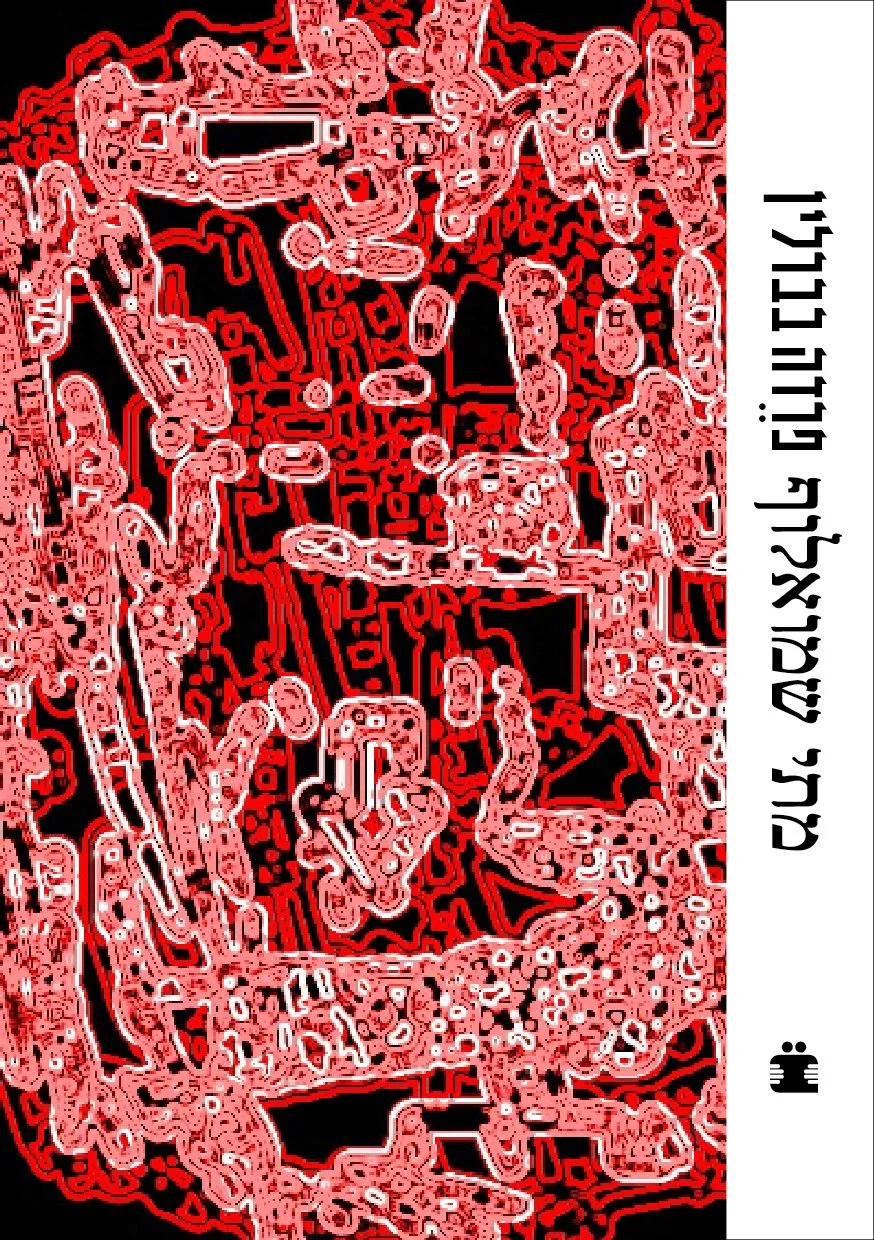
2014
Last Tango in Berlin
Last Tango in Berlin
Poetry
Mati Shemoelof
Booxilla Media, Tel Aviv, 2014
Language: Hebrew
Last Tango in Berlin is Mati Shemoelof’s fifth poetry collection, published in 2014 by Booxilla as a digital-only edition. Written and edited in Berlin shortly after Shemoelof’s move from Israel, the book marks a significant shift in his poetic work: from the explicitly political and socially engaged poetry of his earlier collections toward a more intimate language of migration, separation, desire, loneliness, memory and life in the diaspora.
The collection is divided into two parts, “Farewell” and “Berlin.” Its short, direct poems explore the emotional experience of leaving Israel and beginning a new life in Berlin. Shemoelof writes from the perspective of a Mizrahi Jewish writer whose family roots are in Iraq, Iran and Syria, while confronting the contradictions of Hebrew as a language carried beyond the borders of Israel.
The book was edited by poet and critic Yuval Gilad, whose editing deliberately stripped the poems down to a direct, raw and economical language. Rather than producing a conventional printed poetry book, Shemoelof chose to publish Last Tango in Berlin exclusively in digital form, making it available at a low price and bypassing the traditional structures of literary publishing and distribution.
The collection became part of Shemoelof’s broader exploration of Hebrew diasporic literature. In his 2016 essay for +972 Magazine, “The Diaspora Is an Integral Part of Hebrew Literature,” he argued that Hebrew literature should not be defined by the territorial borders of Israel, but by the writers and communities who continue to use Hebrew outside the country. He described diasporic literature as a space in which Hebrew, Judaism and Israeli identity become detached from national boundaries and encounter other languages and cultures.
This idea also became part of an emerging Hebrew cultural sphere in Berlin. Shemoelof was involved with the Sifriat haIvrit (“Hebrew Library”), a private collection of Hebrew books that became a meeting place and cultural space for Hebrew speakers in Berlin. The library was discussed as an example of how Hebrew could create a diasporic social sphere outside the German-speaking cultural realm. Shemoelof also worked with Tal Chever-Chebovski, an Israeli cultural figure specializing in Yiddish and Hebrew cultures outside Israel, in efforts to develop Hebrew culture beyond the territorial framework of Israel.
These ideas have also been discussed in academic research. In her 2018 PhD dissertation at Fitzwilliam College, University of Cambridge, Contesting the Secular and Converting Space in Berlin? Becoming Jewish in an Urban Scene, Vanessa Maria Rau places Shemoelof within the growing body of scholarship on Israeli migration, Jewish identity and cultural life in Berlin. Rau identifies Shemoelof as a Mizrahi Israeli Jewish writer who revisits the German-Jewish narrative from his own personal and historical position, challenging the victim-perpetrator dynamic that often dominates public discourse in Germany, Israel and beyond.
Rau also discusses Shemoelof’s conception of a “Hebrew Diaspora” in Berlin and the role of the Sifriat haIvrit in creating a Hebrew-speaking diasporic social sphere. She connects this cultural activity to attempts by Shemoelof and Tal Chever-Chebovski to revive Hebrew culture outside Israel, deterritorialize the Hebrew language, and challenge the territorial claims connecting Hebrew language, Jewish identity and the Israeli state. In this context, Last Tango in Berlin can be understood not only as a collection about personal migration, but also as part of a broader cultural process in which Hebrew is reimagined as a diasporic language.
The poems from Last Tango in Berlin also became part of the public discussion around Hebrew-speaking Israeli writers in Berlin. A 2014 taz article by Judith Poppe, “Hebräisch ist ihre Heimat” (“Hebrew Is Their Homeland”), presented Shemoelof alongside Maya Kuperman and Ronen Altman Kaydar as part of a growing community of Israeli writers producing Hebrew literature in Berlin. The article emphasized how Berlin’s multicultural environment and the distance from Israel affected Shemoelof’s writing, allowing more private and personal themes to emerge.
One of the best-known poems from the collection, “The Words About Leaving,” has continued to circulate independently of the book. The poem was later set to music by singer Nitzan Bernstein and appeared in journals, newspapers, academic research and exhibitions. It was also presented by the Jewish Museum Berlin as part of the exhibition A wie Jüdisch, demonstrating the continuing life of Shemoelof’s early Berlin poetry beyond its original digital publication.
Last Tango in Berlin therefore occupies an important place in Shemoelof’s development as a writer. It is both a poetry collection about leaving and a literary experiment in creating Hebrew outside Israel: a book about separation that became part of a larger body of work examining migration, diaspora, language, Jewish identity and the possibility of belonging between places.
Book details
Title: Last Tango in Berlin
Original title: פרדה בברלין
Author: Mati Shemoelof
Publisher: Booxilla Media
Year: 2014
Language: Hebrew
Genre: Poetry