From Vilna with love: The life of a remarkable Yiddish poet
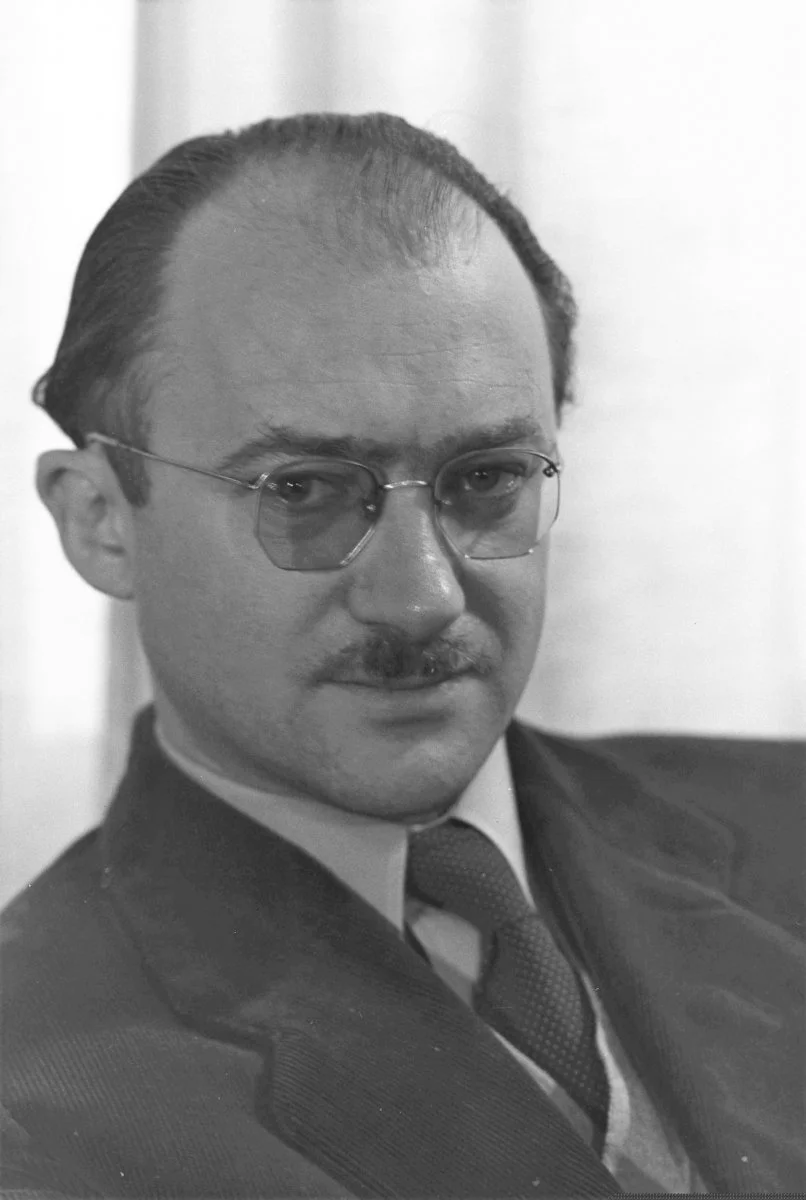
Fritz Cohen, Public domain, via Wikimedia Commons
Published: 20 October 2018
THE DOCUMENTARYBlack Honey, The Life and Poetry of Abraham Sutzkever, which screens this month as part of the Jewish International Film Festival, tells not only the story of the greatest Yiddish poet of the 20th century, it also shows the greatness of Yiddish culture before the Holocaust.
Born in Belarus, in the town of Smorgon, Sutzkever and his wife were sent to the Vilna Ghetto following the Nazi occupation of Vilnius. His mother and newborn son were murdered by the Nazis but he and his wife escaped to the forests and he fought the Nazis as a partisan, joined a Jewish unit and was smuggled into the Soviet Union.
A copy of his book of poems,Kol Nidre,found its way into the hands of the Soviet Union's leaders, who were so touched by the first poetic testimony of the mass murder of the Nazis that he wanted to meet the young Jewish poet. In what sounds like a Hollywood script, the regime sent two planes to take Sutzkever from the woods near Vilna. The first plane was shot down by the Nazis and a second one arrived two weeks later. In February 1946, he was called up as a witness at the Nuremberg trials, testifying against Franz Murer, the murderer of his mother and son.
Israeli actress Hadas Kalderon is the grand-daughter of Sutzkever and is part of the Beit Lesin Theatre in Israel. Her family connection meant that Kalderon was both a screenwriter and a co-producer in the documentary. She brings personal insights to the subject. “My grandfather didn’t want to do a documentary while he was alive. He was really serious about making his poetry work. He never engaged with the “side effects” (interviews or documentaries) of his mission to keep the Yiddish culture alive after the Holocaust. Sutzkever even turned down the famous French director Claude Lanzmann (who madeShoah) when he wanted to interview to him.
How did you come to make a film about him?
I had started to film his story, by myself, back in the 1990s. And when he died in 2010, aged 96, and hardly anyone showed up at his funeral in Israel, I decided to make a film. Ten years ago I was in a TV series directed by Uri Barbash, and I gave him a poetry book of my grandfather’s. I told him that one day we will make a film out about him. Uri was the first person who believed in the idea, and the rest is history - Barbash directedBlack Honey(the film was co-produced by Yair Qedar).
How was it to grow up as the grand-daughter of Sutzkever?
I was very influenced by the story of his life, both in my life and in my art. He told me many stories from the war but only good or heroic stories. For instance, like how he was rescued with my grandmother. Then one time, I went to Europe to an antique store, in Czechoslovakia. I saw a yellow badge, the Star of David that Jews were forced to wear, and I wanted to buy it. The clerk said it would cost US$200. I told my grandfather I didn’t buy it because of the price. He said to me with a little smile: “That is very interesting because I got it for free.”
The movie tells a beautiful story about how he wrote a poem every day.
Sutzkever believed that he was saved because of his poetry. “My Yiddish and my poetry are stronger than any German bullets. Even in the ghetto with my poetry I am a free man because I have something that is a miracle, that is more beautiful than anything else – and that is my poetry.”
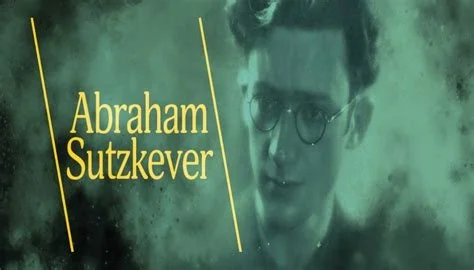
A photo from the documentary - Black Honey, The Life and Poetry of Abraham Sutzkever
We also learn how, while still in the ghetto, he was leader of the “Paper Brigade”.
The Germans wanted to make a museum of Jewish culture after the Jewish people will cease to exist. They had in mind, not only the genocide of the people but also the genocide of our culture. In the Vilna Ghetto, a group of Jewish poets and scholars were chosen by the Nazis to be slave librarians.
While other Jews were trying to smuggle food in, they smuggled in rare, important books like Herzl’s diary, and drawings by Marc Chagall. They hid them in walls, caves, basements, etc. Sutzkever rescued books that now live in New York, Vilna and Jerusalem. In that way, he rescued the human spirit.
In 1949, when he immigrated from Moscow to Israel, the young state forbade public Yiddish performances. How did he respond?
My grandfather said that if he wasn’t afraid from the Goy (the non-Jew), he wouldn’t be afraid from the Jewish people. In 1956 Sutzkever wrote his first long poem, calledIn Midbar Sinai(In Sinai desert) and sent it to Prime Minister Ben-Gurion, who said was a great poem. ”But why did you write it in Yiddish and not in Hebrew?” Sutzkever send him back his answer, with a poem namedYiddish, which is about what would have happened if you try to take the Yiddish tongue out of his mouth, my skin.
“So come and try, if you succeed to do it, I will swallow it and then I will:
“…Open my mouth,
and like a lion
Garbed in fiery scarlet,
I shall swallow the language as it sets.
and wake all the generation with my roar!”
(Translated by: Yiddish book centre)
Obviously, Sutzkever had a strong spirit. Do you feel it is still alive?
The making of the movie paralleled the life of Sutzkever. It was a long and winding road with a lot of closed doors. At first the documentary was rejected by the Israeli Public Broadcasting Corporation and we asked a crowd funding platform for 145,000 NIS ($A56,000) and we got 150,625 NIS - the biggest amount ever raised for a movie in Israel. The audience became involved in the making of the movie. And in that way. Something like a Jewish social change (“Tikkun”) occurred toward Sutzkever’s poetry and towards Yiddish culture in general’.
Main image: Hadas Kalderon, the granddaughter of Sutzkever, signing the poster of the movie
This article was published on the Jewish Independent.
Category Articles & Essays
Keywords - Mati Shemoelof, Abraham Sutzkever, Sutzkever, Yiddish poetry, Yiddish culture, Vilna Ghetto, Holocaust, Jewish literature, Black Honey, Yiddish poet