This one-of-a-kind museum is a town’s atonement for generations of hate
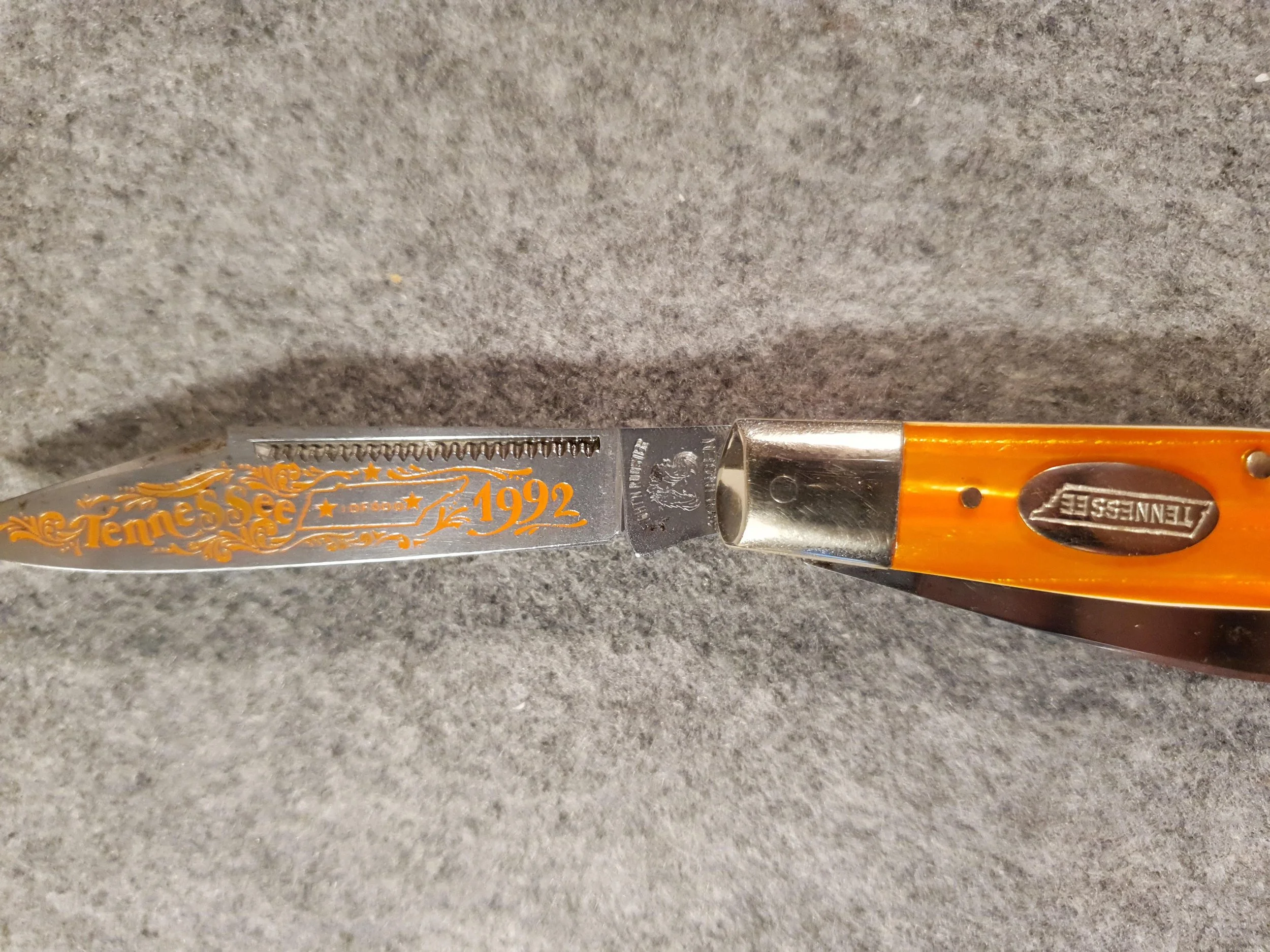
Photo - Pixabay. Solingen’s knifes.
Europe's only art museum dedicated to persecuted artists is in a pretty town with an ugly history
Mati Shemoelof visits the Center for Persecuted Arts in Solingen, reflecting on Jewish memory, persecution, racism, migration and the town’s difficult history.
This historic town of Solingen, West Germany is a picturesque place, built on a hillside overlooking Cologne, Dortmund, Bochum, and even Belgium.
It is hard to match the beauty of the city to its history of persecution or to the tragic contemporary politics explored there.
The town boasts Europe's only institution that deals permanently with persecuted artists and their banned works, Zentrum für verfolgte Künste (Center for Persecuted Arts).
The art museum explores the political narratives and causes of persecution in exhibitions and events, including a Jewish festival entitled L’chaim.
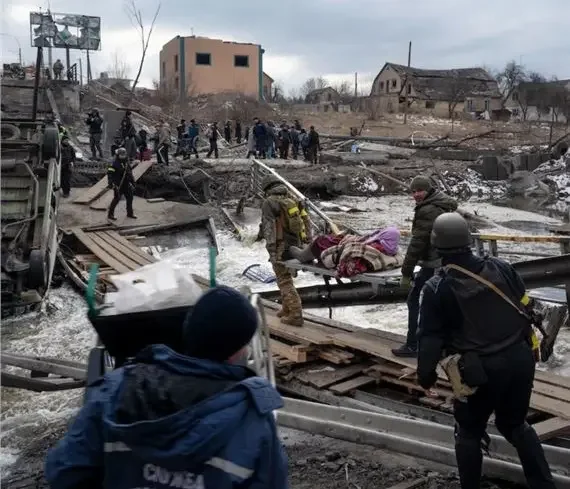
One of the images by Maks Levin on display at the Center for Persecuted Arts (CPA)
Maks Levin
A current exhibition shows the war photos of the Ukrainian photojournalist Maks Levin, who was killed while working as a photojournalist in the current war, at age 40.
When Levin was found dead on 1 April he had been fatally shot twice by Russian servicemen while unarmed and wearing a press jacket. Levin had been documenting the military situation in Ukraine for eight years. His photographs are already icons of this war. The magazine Der Spiegel used Levin's photo of a destroyed apartment block as its cover on 5 March.
The Center for Persecuted Arts was founded in 2015, initiated by the Else-Lasker-Schüler-Gesellschaft Society, which is dedicated to a culture of remembrance.
Solingen has a deep history of persecution, not only in Nazi-Germany but also more recently. The birthplace of Adolph Eichmann, it expelled or murdered its Jewish population during the Holocaust. The German population has suffered too. The old city was destroyed in the Allied attacks in 1944 and thousands of people were killed and wounded.
But the town did not learn easily from its history. Much later, on the night of 28 May 1993, four young German men, far-right neo-Nazis, set fire to the house of a Turkish family. Two women, and three girls were killed.
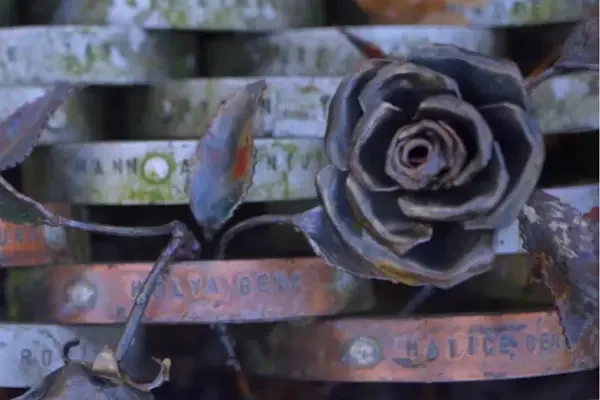
A detail of the memorial for victims of the 1993 Neo-Nazi attack
to give a voice to persecuted minorities
This is one of the reasons why this museum was founded: to give a voice to persecuted minorities.
I visited Solingen for a panel at the L’chaim festival with Ukrainian-Jewish writer Dmitrij Leonidovich Kapitelman and festival curator Birte Fritsch.
Kapitelman recounted how his parents wanted to emigrate from Kiev in Ukraine to Israel but instead came to Germany, when he was nine years old. They arrived in Saxony, a conservative German region known for its xenophobia. Kapitelman suffered racism and was derisively called "ruskind" (Russian child).
Kapitelman’s first language was Russian, but he writes in German. His first book was about his trip to Ukraine to look for his roots and how his German identity confronts his past. We spoke about different stereotypes that were used in Germany towards Jews. After I emigrated to Germany, I was shocked to find that “Jude” is still used as a curse word within the far-right circles.
I shared my ethnic experience in Israel, where the stereotypical images of “ars” (pimp) and “frecha” (chip girl) were used for years to refer to Mizrahim (Jews from Arab countries). It made me ashamed of my own roots until, years afterwards, I used my poetry to contradict these wrong images and to find pride in my own identity.
When I heard about the trips of Kapitelman with his parents to Ukraine and Israel, as he returned to look for his roots, I couldn’t sit quiet. I told the audience about my inability to fly to Iraq, Syria, Iran – all three countries where my ancestors were living for hundreds of years.
Both Israel and the Arab countries prevented me from getting to the cities of Bagdad, Damascus, and Mashad to look for my Jewish roots. Still until this day, the door is closed to these three places, where once the Jewish centres flourished.
After the panel, we went outside to the balcony to watch the evening’s light falling on the colourful trees.
A woman introduced herself as a German Jew and told me that her father was a Holocaust survivor who had returned to Solingen. He was one of the lucky Jews who could go back after the Holocaust and live again in Solingen.
We talked about the hard experience of other Jewish survivors who went back after the Holocaust to Poland and other east-European countries and were met again with harsh antisemitism. Today the community is growing again. The Jewish community of Wuppertal, of which Solingen is part, consists of more than 2,000 members, most from the former Soviet Union.
Solingen’s other claim to fame is it tradition of knife-making. My German friends from Berlin asked me, if I was taking a knife with me, when they heard, I was going to Solingen.
But in its modern incarnation, it is finally learning to sheath them.
Category: Articles and Essay, Art Writings
Tags - Mati Shemoelof, Solingen, Center for Persecuted Arts, Zentrum für verfolgte Künste, Persecuted Artists, Jewish History, German-Jewish History, Holocaust, Jewish Memory, Antisemitism, Racism, Migration, Mizrahi Jews, Ukrainian Jews, Ukraine, Maks Levin, Dmitrij Kapitelman, L’chaim Festival, Solingen Attack, Far-Right Violence, Germany, Poetry, Art and Politics
Related links:
The German Synagogue Renovated for a Community That Has No Jews
Survivor’s Speech in Berlin Put Herzog’s Fine Words in the Shade
Image caption:
One of the images by Maks Levin on display at the Center for Persecuted Arts (CPA)
Photo credit:
Center for Persecuted Arts (CPA)