‘A German friend emailed to apologise on behalf of his people’
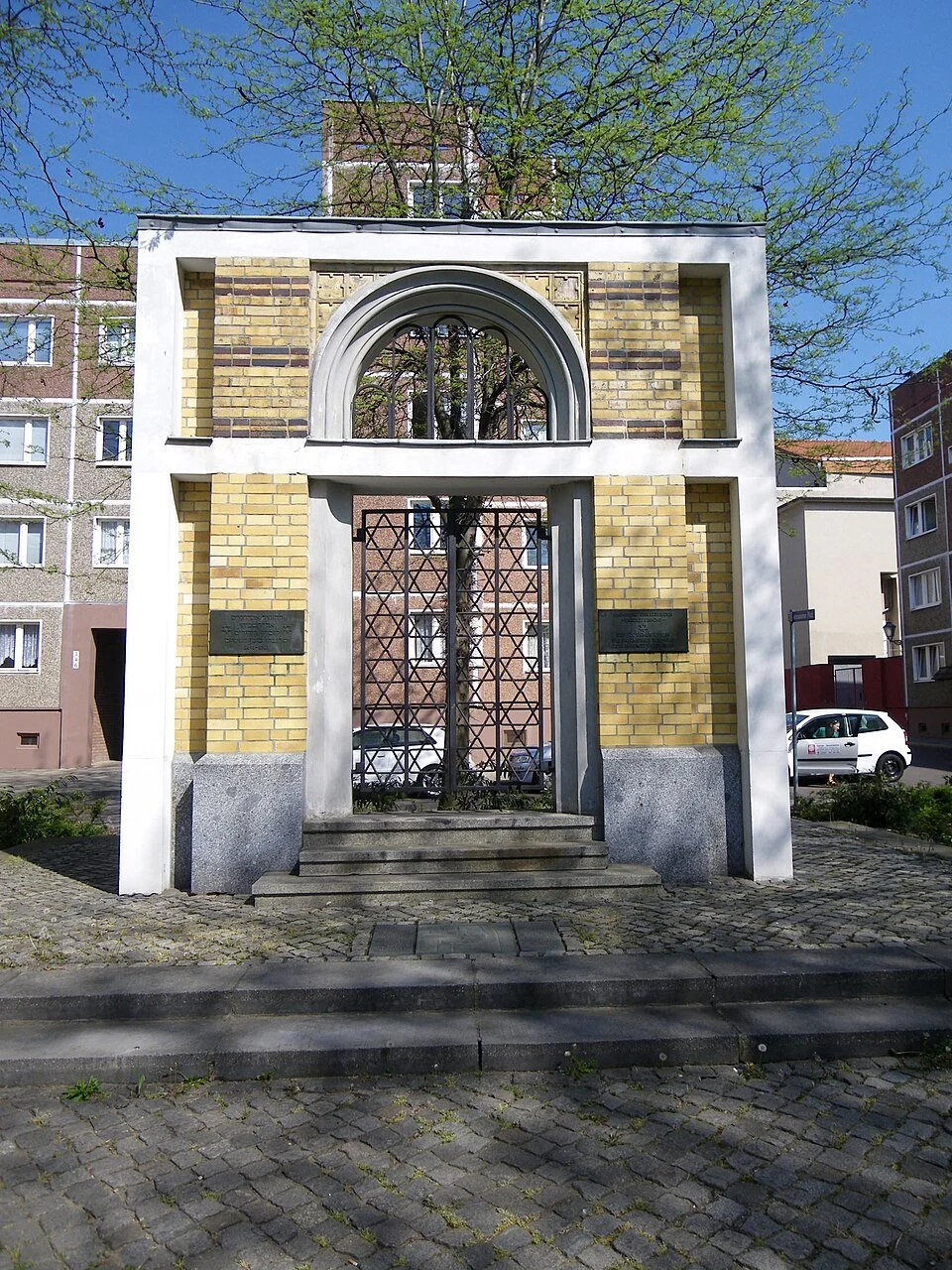
Dagmar Schmidt, CC BY-SA 3.0 <https://creativecommons.org/licenses/by-sa/3.0>, via Wikimedia Commons
Mati Shemoelof reflects on the 2019 Halle synagogue attack, Yom Kippur, antisemitism in Germany and the experience of Jewish life in Berlin.
I HEARD ABOUT THE ATTACK on the Halle synagogue, at about 5pm, while I was still fasting on Yom Kippur. My phone and computer were closed. I had just entered the Fraenkelufer Synagogue in central Berlin and waited for a prayer that was to begin. I sat down with a German woman who came to pray with us and told me the awful news.
Although the details were truncated, the news was sad and scary. I knew that inside my phone were messages from my mum and loved ones. Outside the synagogue, police cars stood with reinforcements.
I thought about Israel having security everywhere except the synagogues. In Germany you don’t see security guards everywhere, only outside the synagogues. Suddenly, the guards felt safe and right for me. The security guards outside the Halle synagogue, where the terrorist attack occurred, turned out to be the ones who stopped the massacre. And yet two people were murdered because they were in the area.
I thought about Israel having security everywhere except the synagogues. In Germany you don’t see security guards everywhere, only outside the synagogues. Suddenly, the guards felt safe and right for me. But it turns out that there were no security guards outside the Halle synagogue, which is terrible. They must be put in all synagogues across Germany.
As soon as I heard about the attack, I prayed that they were not Arab refugees. Just this week there was a terrorist attack by a man in the Ohrinerburger Synagogue in Berlin, who came with a big knife and shouted Allah hu Akbar. Strangely enough, the German police released him at the same day.
Anyone who talks about a single perpetrator completely ignores the discourse spouted by the AfD (Alternative for Germany) party and its hatred, which is a significant cause of harm to Jews and Muslims. But already many people believe that all Arabs are anti-Semitic, which is sad. In Berlin, Jews and Arabs live life in common and quite a few of them are refugees. The most serious crime, in my opinion, is to generalise and demonise a group because of individual acts.
Last night I received an email from a good German friend who felt guilty and apologised on behalf of his people. I told him he was part of the solution and not part of the problem.
Germany should look carefully at where terrorists come from and fight anti-Semitism with all the tools available. She must not sweep this violence under the rug, no matter what the origin or background of the perpetrators.
During the Day of Atonement, I prayed that God would protect my little daughter, and I felt the power of intention. That was before I heard about this massacre in a Halle synagogue. Now my fears are doubled and multiplied.
When the last prayer,Tfilat Haneilafinished, we went to the back room of the synagogue and immediately opened our phones to call loved ones, and read about the devastating news. Then we had coffee, ate sweet cakes and played with our kids.
We went out to eat a Turkish lentil soup and it started to rain lightly. I joked to my friend that I should wear my kippa to protect me from the rain.
"Oh my god, no. I don’t want to be identified as a Jew in the street after what had happened,” he replied.
I put my Kippa back in my pocket.
Author
Mati Shemoelof
Published
10 October 2019
Last updated
4 March 2024
The article was published on the Jewish Independent
Categories
Internal links
Tags / Keywords
Halle synagogue attack, Halle attack 2019, Halle synagogue, Yom Kippur, antisemitism, anti-Semitism, Jews in Germany, Jews in Berlin, Jewish life in Berlin, Germany, Berlin, Fraenkelufer Synagogue, kippah, Arab Jews, German Jews, Mati Shemoelof