Mati Shemoelof: Israeli Writer in Berlin
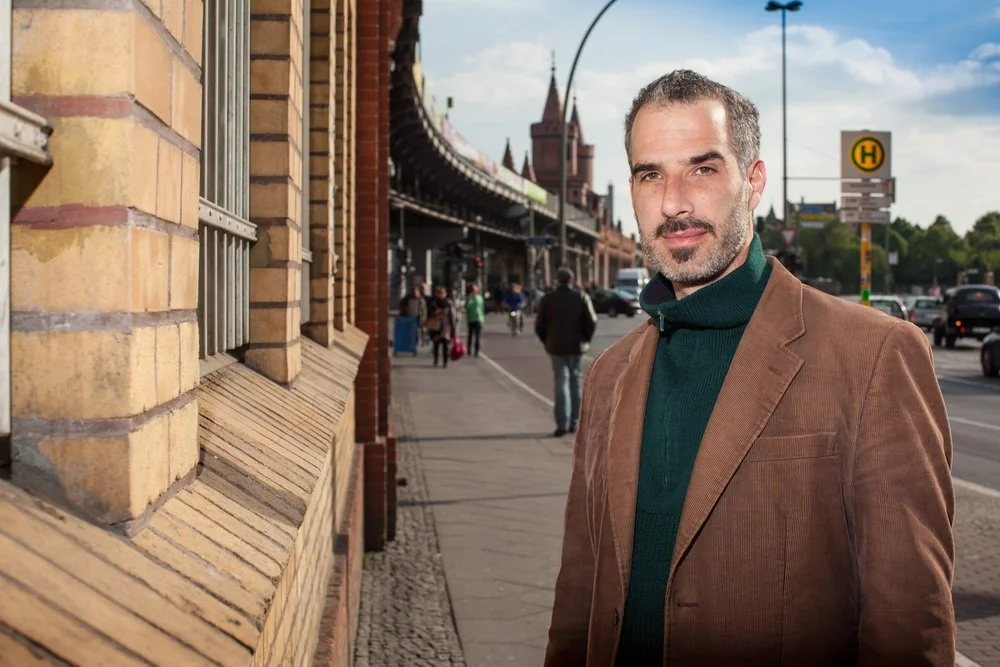
Photo - Cfir Harb. 2014.
Mati Shemoelof is an Israeli writer, poet and cultural figure based in Berlin. His writing connects Israeli literature with questions of migration, exile, language, identity, memory and life in Europe. Since moving to Berlin in 2013, Shemoelof has developed a body of literary and cultural work that moves between Israel, Germany and the wider Middle East. Berlin is not simply a background in this work. It is a place from which questions about Israeli identity, Jewish identity and migration can be reconsidered.
From Israel to Berlin
Shemoelof was born in Haifa and developed his literary career in Israel before moving to Berlin. His experience of migration became part of his literary work. The move created a distance from Israel while maintaining strong connections to Hebrew, Israeli society, family, friends and the cultural world in which he had developed as a writer. This position between places became an important part of his writing. The Israeli writer in Berlin is not simply an Israeli writer who has left Israel. Migration changes the relationship to language, politics, memory and belonging.
Writing Berlin
Berlin appears in Shemoelof's fiction, essays and journalistic writing as a place of encounters and contradictions.
His writing addresses the experience of Israeli immigrants, the relationship between Israel and Germany, questions of class and privilege, and the different histories carried by Israelis who arrive in Berlin. His short-story collection Remnants of the Cursed Book and Other Stories includes stories connected to Berlin alongside stories set in Israel and other literary spaces. The collection moves between poetry and fiction, reality and fantasy, identity and exile. The Berlin sections of the book reflect a writer negotiating the distance between his former home and his new environment.
An Israeli writer with a Mizrahi background
Shemoelof's experience in Berlin is also shaped by his Mizrahi and Arab-Jewish background. His family's history connects him to Jewish communities from the Middle East, while his literary language developed in Hebrew within Israeli society. This creates a particular position in Germany. The dominant European understanding of Jewish history often emphasizes European Jewish experiences. Shemoelof's writing asks what happens when an Israeli writer arrives in Germany carrying a different Jewish history: a history connected to Iraq, Iran, the Middle East and North Africa. The question is therefore not only what it means to be Israeli in Berlin, but what it means to be a Mizrahi or Arab-Jewish Israeli in Europe.
Hebrew outside Israel
Migration also changes the meaning of Hebrew. For Shemoelof, Hebrew in Berlin exists outside the national environment in which it normally operates. It encounters German, Arabic, English and other languages. This creates questions about what happens to Hebrew when it becomes a diasporic language. How does Hebrew change when it is spoken and written by migrants? What happens when Israeli writers work outside Israel? Can literature written in Hebrew outside Israel create a different relationship to place, nation and identity? These questions are part of Shemoelof's broader literary interest in multilingualism and migration.
Literature between Israel and Germany
Shemoelof's work does not treat Israel and Germany as isolated cultural spaces. His writing moves between them. His German publications include Bagdad | Haifa | Berlin, a bilingual poetry collection published in Germany in 2019. His essays and cultural writing have also explored questions of German culture, migration and Jewish identity. His later work continues this movement between languages and places, bringing together Israeli, Jewish, Arab-Jewish and European perspectives. Berlin has therefore become not only a place where Shemoelof lives, but an important literary location from which he writes.
The migrant writer
The migrant writer often lives between categories. For Shemoelof, this position can be uncomfortable, but it can also create literary freedom.
Distance from Israel makes it possible to look back at Israeli society differently. Living in Germany makes it possible to question European assumptions about Jewish identity. At the same time, the connection to Hebrew and to Israeli cultural life remains. The result is a literature of movement: between Haifa and Berlin, between Hebrew and German, between Jewish and Arab histories, and between national identity and diasporic life.
Related work
A Mizrahi in Berlin
Questions of an Arab-Jewish Diaspora
Bagdad | Haifa | Berlin
Remnants of the Cursed Book and Other Stories