Mizrahi Identity, Representation and the Politics of Belonging
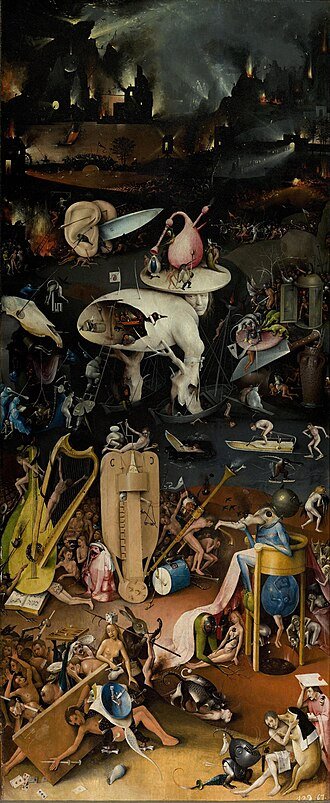
Hieronymus Bosch, Public domain, via Wikimedia Commons
In this essay, originally published in der Freitag, Mati Shemoelof reflects on Mizrahi identity and its place in contemporary Israel. Writing from his own experience as an Arab-Jewish writer of Iraqi, Iranian and Syrian Jewish heritage, he examines the complicated history of the term “Mizrahi” and the long-standing social and cultural tensions between Mizrahi and Ashkenazi Jews in Israel.
The essay takes the form of a personal letter to Israeli politician Itamar Ben-Gvir, whom Shemoelof first encountered as a young activist at the release of Mordechai Vanunu. From this shared Mizrahi background, the text follows two radically different political paths: one leading toward poetry, culture and a search for Jewish-Arab coexistence, the other toward nationalist politics and the use of Mizrahi and Kurdish identity within a politics of exclusion.
Shemoelof also explores his own Iraqi and Kurdish Jewish family history and argues for understanding Arab-Jewish identity through complexity, entanglement and shared history rather than through separation and ethnic hierarchy. The essay asks what representation means when identity is detached from equality and justice, and what a Mizrahi identity committed to coexistence and Palestinian equality might look like today.
Originally published in der Freitag.
Focus keyphrase
Mizrahi identity
Secondary keywords
Ashkenazi and Mizrahi Jews
Iraqi Jewish history
Kurdish Jewish history
Mizrahi culture
Jewish identity in Israel
Itamar Ben-Gvir
Mati Shemoelof
Mizrahi identity in Israel
Jewish-Arab history
Category:
Art & Writing → Essays / Cultural Writing
Tags:
Mizrahi · Arab-Jewish · Jewish History · Israel · Mizrahi Identity · Diaspora · Iraqi Jews · Kurdish Jews · Identity