No Bird Sees
A poem by Mati Shemoelof, translated into English by Chaim Benjamin Rubenstein, mourning a Palestinian child killed in Gaza and calling for remembrance, recognition and peace.
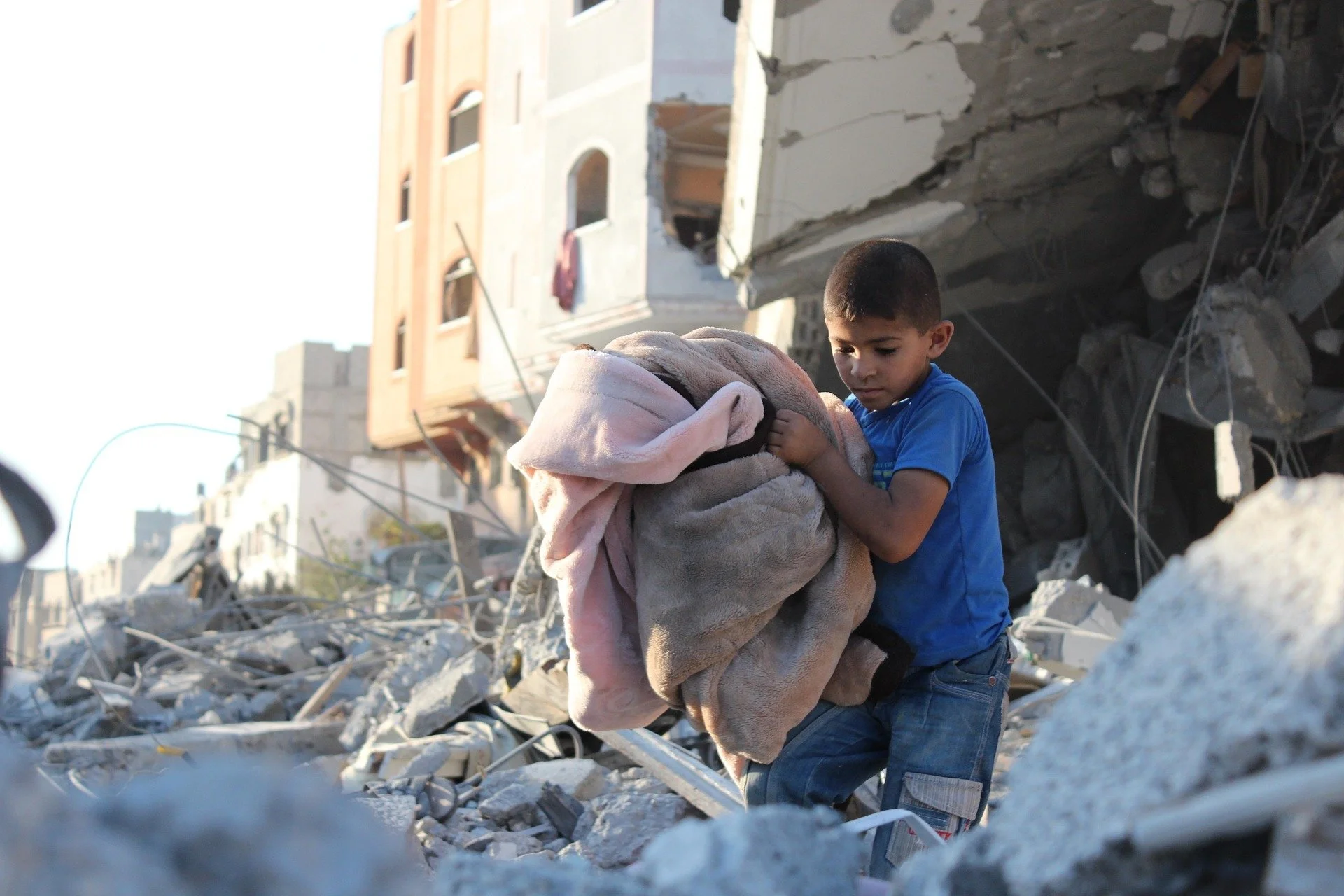
Photo - Pixabay
Mati Shemoelof
English Translation: Chaim Benjamin Rubenstein
The former Israeli poet: No bird sees presently
the Palestinian child buried under the ruins
of a house, not a temple.
The only dwelling there
was the love of his parents,
whose entire life was exile
from their home beyond the border.
How many times has this Palestinian house been destroyed?
Once in the “Nakba”1 that cracked our hearts,
another by the tractor plowing our lands,
again with the “Naksa”2 that took away our hope,
again with the settlements that severed our hands,
again with the racism that slashed our ears,
once more with the dream of another forced ethnic cleansing that charred our souls.
*
Anxiety and fear are our names,
We never got to touch tenderness,
Distress, terror—
they walked beside us like our brothers and sisters.
*
The Palestinian child says : I have neither a first name or last,
No Israeli football teams bear my name or my pictures,
no signs outside the cities or within them,
No poetry will be written about my suffering by the national poet of the occupiers,
I do not have your God’s blessings, (yes, you can start and pray for me now)
no place in your heart bares my poem,
none of your stories mark my family,
My family, too, is buried beneath the rubble
like other families with no name.
I pray to God like my parents did, but he doesn’t hear my prayer,
But i don’t have another prayer, i ask him to stop the bombs
stop the fire, stop the pain, stop the hunger,
i want to live like the other kids…
And my father,
who was in and out of colonial detention,
without a judge or a lawyer.
And what remains for my mother?
Only white hair, the mark of her troubles
few in the nation that stole our generational heritage, remember what was done to us, fewer still
speak up about it without fear.
*
The former Israeli poet: A temple must first exist before it can be destroyed.
You never had the fortune to ascend to one—
only to sink deep into the earth
to meet the other poor souls with no nation. Those filled with sorrow over the sword that cut a
divide between us.
Now, we share one language of the dead,
a sorrow for what we left behind— a sorrow for what still awaits us somewhere in the future.
*
And now, you weep and kiss
your parents
they take you beyond the river of the Lethe3
Your temple could never be ruined—
for you had no temple
besides them.
*
To tell the truth, i don’t know if you have found your parents
guided by the angels.
and i know that some poets like the words
but there is no holiness in dying under occupation and starvation or under bombs
„holy,“ „seraph,“ or „pure.“ are words that only the occupier can use
Little sweet child, i know that the people i left
buried you beneath
concrete pillars,
by a bomb more expensive
than anything you had
in your entire life.
and i am ashamed and sorry that we never met.
As you stand before the creator,
do not ask for mercy, compassion, or forgiveness.
Ask only that they speak your name,
that they tell your story,
as they speak their own names, tell their own stories, recount their own lives.
Only then, when they recount your life
as they recount their own,
will you find eternal rest.
*
In the meantime,
There is no place for dreams in Gaza, only nightmares.
Who hears the sighs?
Is there room to bless this cursed place where you grew up?
Is it possible to find grace within the suffering?
Can the word sorrow be uttered, only in relation
to the Israeli people who buried you and your dreams?
Surely, love cannot be spoken of at all.
And what is your name?
They still do not know.
Your story does not cross the river of forgetting.
And those who did cross
know, recognize, and embrace.
Only underground, there is love.
Only beneath the pillars of concrete.
can eternity and blessing be spoken of.
Down under Kaf HaKela4
they will not grant your people any flag or state.
Only the Committee Against Torture
will write letters that no one will read.
And yet, the former Israeli poet asks to bless the nameless Palestinian child,
the Palestinian mother who lost her fate,
the people who have never seen a day of blessing
upon the face of the earth.
May we be able to say your name,
and your family’s name.
May we build you a room
inside the temple of peace.
May we cry out your name
from the beginning of the world to Genesis itself.
May your name fill the space of the world.
And grant us the strength,
like in music, to bring healing, reconciliation, and recovery.
For every child who is gone,
with no way back,
bears the world’s contraction,
the extinguished days of the sun.
And may we be able to say your name,
and your family’s name—
as every name in the world,
equal among equals.
To restore your hopes,
your aspirations,
a game of football,
a father’s embrace,
a mother’s pride.
And may this nation distance itself
from war crimes, racism, and exclusion.
May we neither be those who seek to destroy you,
nor those who wish to forget your name.
Forgive us for not learning your name.
Pardon us for not memorizing your story,
your family name.
There are no bright skies
in the seven heavens—
only voices of joy
as you reunite with your parents.
And beneath the earth,
there is a secret we shall never know.
_____________________________________________________________________________
The Nakba (Arabic: النَّكْبَة, romanized: an-Nakba, lit. ‚the catastrophe‘) is the ethnic cleansing of
Palestinian Arabs through their violent displacement and dispossession of land, property, and
belongings, along with the destruction of their society and the suppression of their culture, identity,
political rights, and national aspirations.The Naksa (Arabic: النكسة, „the setback“) was the displacement of around 280,000 to 325,000 Palest
inians from the West Bank and the Gaza Strip, when the territories were captured by Israel in the 1967 Six-Day War.Lethe is one of the five rivers in Greek mythology that flow through the underworld. Its name means
„forgetfulness,“ and it was believed that the souls of the dead drank from its waters to forget their past
lives before reincarnation or eternal rest.Kaf HaKela (הקלע כף) is a concept from Jewish tradition describing a place of torment for sinners‘ souls after death, where the soul is flung from one end to another without rest.
First published in stadtsprachen magazin. Volume 32.
Category Poetry, Poetry anthologies
Tags
Mati Shemoelof, Kein Vogel sieht, German Poetry, Deutsche Gedichte, Hebrew Poetry, Hebrew Literature, German Translation, stadtsprachen, stadtsprachen magazin, Palestinian Poetry, Gaza, Palestine, Israel, War, Memory, Mourning, Migration, Exile, Diaspora, Jewish-Arab Literature, Jewish-Arab Poetry, Contemporary Poetry, Political Poetry, Peace, Translation, Chaim Rubinstein, Chiara Schimpe, Birger Hoyer, Joey Bahlsen
Related / Internal Links